Atomic, Molecular, and Optical Physics

Table of Contents

Overview

A central theme in AMO science in recent years has been the thrust to understand and control atoms, molecules, and light in new ways that were hardly dreamed about, only a decade ago. Experiments pioneered in this Department and in the affiliated institute JILA resulted in two shared Nobel Prizes in Physics in 2001 for the creation of ultracold quantum gases and another in 2005 for breakthroughs in ultraprecise laser and optical physics.

The ability to tune the interactions in a few-body or many-body quantum mechanical system has captivated the field and caused an explosion of interest around the world, and this is being pursued hotly by experimentalists and theorists working in this area. Some of the fastest lasers in the world, whose pulse of light last less than a millionth of a billionth of a second, reside in experimental laboratories here, as well as theoretical studies of their potential exploitation for new ways to probe and manipulate matter.

Experiments and theory in this Department and JILA also tackle the fundamental chemical physics processes and reactions that occur in the cold reaches of interstellar clouds in space, of interdisciplinary interest for chemistry and astrophysics in addition to physics. Another frontier pursued by cutting edge research here is the crafting of atom-light interactions so precise that a new generation of atomic clocks can be envisioned, whose accuracy approaches 1 second in the lifetime of the universe. This is the age of controlling nature at the quantum level, and this forefront area generates tremendous excitement on the Boulder campus and beyond.

Experimental Research

Atomic, Molecular and Optical Physics (commonly referred to AMO Physics) is the study of the interaction between light and matter. Physicists study this interaction on various scales, from the atomic to molecular level, in order to explore critical scientific questions. Topics in AMO Physics include the behavior of atoms in ultralow temperatures, pursuing ever-more precise forms of measurements, as well as related investigations into chemical and biological physics.

Experimental AMO physicists work to better enhance precise measurements of smaller forms of matter, and test theories in the laboratory.

Anderson_GroupAnderson Group

I'm interested in nonlinear optics, atom optics and optical precision measurements. Our group is currently investigating acoustic and RF antenna-array signal processing and sensing of chemical vapors.


Cornell_Group

Cornell Group

My research interests center around the behavior of extremely cold atomic gases. I am best known for producing a Bose-Einstein condensate in a sample of trapped atoms. My group investigates techniques for manipulating cold atoms and studies interactions between trapped alkali atoms at collision energies below one microKelvin.

Cundiff_GroupCundiff Group

The research in our group centers around lasers generating ultrashort pulses. Several laser systems generating pulses with widths from 10 femtoseconds to several picoseconds are used in the laboratory. We are working on a variety of research projects that involve studying the interaction of these short pulses with matter and using specific types of lasers for optical frequency measurements.

jin_group

Jin Group

My research focuses on ultracold trapped atoms. My experiments use laser cooling, magnetic trapping, and evaporative cooling to reach temperatures below one microKelvin, where quantum statistics dominate the behavior of atoms.


Kapteyn_Murnane_GroupKapteyn-Murnane Group

The thrust of research in our group is in optical science and technology. We develop new ultrafast laser and x-ray sources as part of our research in optical science, and we apply these light sources for new experiments in physics, chemistry, materials science and engineering

Lewandowski_GroupLewandowski Group

My group uses a two-step process to prepare ultracold molecules of NH, a simple free radical. The first step, supersonic expansion, forces NH molecules through a small opening into a vacuum system, where intermolecular collisions cool the rapidly expanding gas (400 m/s) to less than 1 K. The second step uses varying electric fields (Stark deceleration) to slow the cold molecules to rest.


Raschke_Group

Raschke Group

We work in experimental nonlinear and ultrafast nano-optics. This includes spatio-temporal optical control, optical antennas, surface plasmon and phonon polaritons, extreme nonlinear optics, and strong light-matter interaction

.


Regal_Lab

Regal Lab

My main research interest is quantum systems of interacting atoms, photons, and phonons. I seek to engineer and explore new quantum systems with controlled connections for quantum information and quantum optics.

schibli_group

Schibli Group

We strive to advance science and technology in the fields of optics and photonics through advanced functional materials, novel laser systems and measurement techniques. We also pursue nonlinear frequency conversion inside micro resonators on silicon chips, and we work towards fully monolithic solid-state lasers that could survive even under the harsh conditions in a spacecraft.

Thompson_LabThompson Laboratory

My research focuses on understanding the interface between ultracold atoms and quantum optics - an understanding I plan to apply to the field of precision measurement. I am presently devising strategies to reduce the effect of the fundamental quantum noise that arises from Heisenberg's uncertainty relationship as applied to atomic spins.

Ye_group

Jun Ye Group

My main research interests include ultrasensitive laser spectroscopy, optical frequency metrology, and quantum optics using cold atoms. My group is exploring molecular dynamics using exquisitely sensitive absorption-measurement techniques developed in JILA. We also use high-sensitivity techniques to define ultrastable optical frequency standards, currently being explored for their use in metrology, communications, and high-precision measurements such as in NASA's space-borne interferometers.


Theoretical Research

Atomic, Molecular and Optical Physics (commonly referred to AMO Physics) is the study of the interaction between light and matter. Physicists study this interaction on various scales, from the atomic to molecular level, in order to explore critical scientific questions. Topics in AMO Physics include the behavior of atoms in ultralow temperatures, pursuing ever-more precise forms of measurements, as well as related investigations into chemical and biological physics.

Theoretical AMO physicists use mathematical models to attempt to explain and predict the behavior of matter and light as they interact.

Becker_Group

Becker - Ultrafast AMO Theory Group

My research interests are related to the theoretical analysis and numerical simulation of ultrafast processes in atoms, molecules and clusters interacting with intense laser pulses. My group pursues theoretical studies on the coherent control of chemical reactions, the observation of correlated electron dynamics in atoms and molecules, the imaging of molecular dynamics, and the propagation of ultrashort intense laser pulses.


Bohn GroupBohn_Group

My primary research centers on the theory of collisions between trapped atoms and molecules in a dilute gas at milliKelvin temperatures and below. My goal is to unravel these delicate energy exchanges and assess their response to external electromagnetic fields.

Greene_GroupGreene Group

My group concentrates on theoretical problems involving strongly-correlated few-body quantum systems in various regimes, including ultracold atomic gases, electron-molecule collisions, and laser-molecule interactions. We often utilize adiabatic formulations in one or more coordinates, in order to gain physical insight and map the interaction physics.


Holland GroupHolland_Group

My research involves theoretical studies of Bose-Einstein condensation, including (1) the modes of oscillation, (2) the quantitative effect of interactions and loss processes, (3) the behavior of a condensate undergoing evaporative cooling, and (4) the thermodynamics of a small number of atoms. I also investigate quantum optics, in which I study the properties of laser fields and their interaction with matter.

Rey_Theory_Group

Rey Theory Group

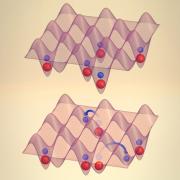
Our research group focuses on ultracold atoms and molecules loaded in optical lattices. Optical lattices are periodic trapping potentials created by illuminating the atoms and molecules with laser beams. Atoms in optical lattices are analogous to electrons in solid state crystals.