Condensed Matter Physics

Condensed Matter Physics

Table of Contents

Overview

The field of condensed matter physics explores the macroscopic and microscopic properties of matter. Condensed Matter physicists study how matter arises from a large number of interacting atoms and electrons, and what physical properties it has as a result of these interactions.

Traditionally, condensed matter physics is split into "hard" condensed matter physics, which studies quantum properties of matter, and "soft" condensed matter physics which studies those properties of matter for which quantum mechanics plays no role.

The condensed matter field is considered one of the largest and most versatile sub-fields of study in physics, primarily due to the diversity of topics and phenomena that are available to study. Breakthroughs in the field of condensed matter physics have led to the discovery and use of liquid crystals, modern plastic and composite materials and the discovery of the Bose-Einstein Condensate.

CU Boulder faculty who study Condensed Matter physics are engaged in exploring the theoretical models of condensed matter, as well as experimenting with and observing the behaviors of condensed matter in a lab environment.
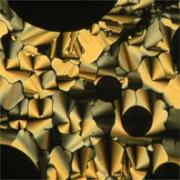
Experimental Condensed Matter Physics

By putting theory to practice, our award-winning faculty use state-of-the-art technology to explore and observe fascinating phenomena at the quantum level. Faculty in the experimental condensed matter field work with primarily graduate and post-doc students in order to conduct research. Occassionally, undergraduate students are invited to participate in research activities. For more information on any of these groups, please visit the group's Web site.

noel_clark_lab

Noel Clark's group

Research is directed toward understanding and using the properties of condensed phases, ranging from experiments on the fundamental physics of phase transitions and chirality in liquid crystals, to the importance of liquid crystal ordering in the self-assembly of DNA and its role in the evolution of life in a pre-biotic earth, to the development of liquid crystal electro-optic light valves.


A demonstration of Laser-ARPES (Angle Resolved Photoemission Spectroscopy).

Daniel Dessau's group

We use femtosecond optics and electron spectroscopic tools for the study of the electronic structure, magnetic structure, and phase transitions of novel materials systems such as high temperature superconductors (HTSCs or cuprates) and colossal magnetoresistive oxides (CMRs or manganites)


Minhyea_Lee_GroupMinhyea Lee's group

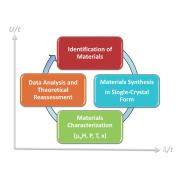
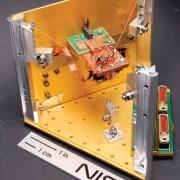
Our research focuses on understanding collective behavior in condensed matter systems via electrical and thermal transport properties, under the control parameters of high pressure and magnetic  field.


Konrad_Lehnhert_GroupKonrad Lehnert's group

In our lab, we study the quantum behavior of small electrical or electro-mechanical circuits.


joseph_maclennan_labJoe MacLennan's group

Experimental physics of soft condensed matter, including liquid crystals. Research topics include the structures and phase behavior of polar and chiral liquid crystals, and the physics of topological defects and inclusions in thin freely-suspended smectic films.


Kyle_McElroy_GroupKyle McElroy's group

Our laboratory is developing new scanning tunneling microscopy (STM) techniques or the study of impurity atoms in metal, carbon based, oxide, and other surfaces.


John_Price_Group

John Price's group

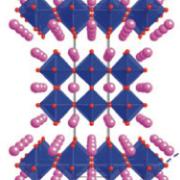
Our approach to created fast electro-optic materials involves incorporating polar molecular rotors into known metal organic framework (MOF) structures.


Dmitri Reznik's groupDmitry_Reznik_Group

We use X-ray and neutron scattering to study electron properties of many exciting materials.


Chuck Roger's group

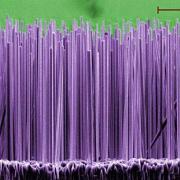
Our group works in the general area of experimental condensed matter physics of thin films and very small systems. Presently, the group is working on the nanoelectromechanical behavior of nanowires and fabricated electromechanical structures, buried interfaces in photovoltaic systems, and surface molecular dipole systems.

smalyukh_lab

Ivan Smalyukh's group

Our scientific interests encompass different branches of soft condensed matter and optical physics, including novel laser trapping and imaging techniques, molecular and colloidal self-assembly, fundamental properties of liquid crystals, polymers, nano-structured and other functional materials, as well as their photonic and electrooptic applications.

raschke_group_condensedMarkus Raschke's Group

We use and develop nonlinear and ultrafast optical scanning probe techniques to study domain formation, dynamics, and phase transitions in complex oxides, including ferroelectrics, and multiferroics, with emphasis on effects of reduced dimensionality and quantum confinement.


Theoretical Condensed Matter Physics

Theoretical physics forms the foundation of modern physics. Using fundamental principles in math and physics, the faculty who explore theoretical condensed matter physics utilize hypothetical, mathematical models to calculate, explain and predict the behaviors of various and changing forms of matter. For more information on any of these professors and their work, please visit their Web site.

Beale_Research_ImagePaul Beale

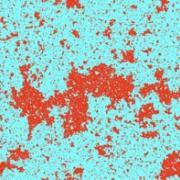
My research interests are thermodynamics and statistical mechanics of condensed matter systems, phase transitions and critical phenomena, Ising model and other spin models, solid-liquid phase transitions, random materials, liquid crystals, Monte Carlo methods and pseudorandom number generators. I am also engaged in physics education research projects involving upper-division courses for physics majors.

Gurarie_Research_ImageVictor Gurarie

I am interested in exact methods of statistical mechanics and quantum field theory, with applications to problems of quantum Hall effect, disordered conductors and insulators and problems arising in the field of ultracold atoms.

Hermele_ModelMichael Hermele

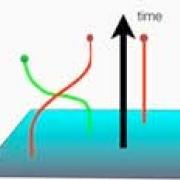
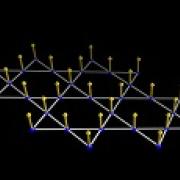
I am interested in quantum magnetism, spin liquid physics, as well as problems in cold atoms.


Radzihovsky_GroupLeo Radzihovsky

I am interested in a broad range of condensed matter phenomena, just about anything, where interactions and fluctuations play a qualitative role. These range from rubber to liquid crystals and colloids, superconductors to quantum atomic gases and the quantum Hall effect, vortex lattices to charge density waves. Even if not always the highest hit on science citation index, some of this work has even inspired a song on youtube.